


Few things start your day worse than your toilet refusing to stop running when you're rushing out the door. So you call your maintenance company and they say it'll take a day because the plumber needs to go get the parts they don't have on hand. A higher water bill coming your way, wasting water, and the time you now need to figure out what's wrong.
That was the problem we wanted to solve for our client’s residents. The main goal was to reduce “windshield time”, the time technicians spend driving to a hardware store for parts they didn’t have in their vans, so they could increase first-time fixes. How do you help maintenance technicians consistently show up with the right parts, reduce costly hardware store runs, and resolve issues faster without creating more operational chaos behind the scenes?
We built Sibi Field around three core principles. First, make every tech visit count. Second, create a system of record you can trust. And third, scale with flexible operations by making it easy for ops teams to run field inventory in the way that works for them, including sourcing from the suppliers they prefer and standardizing through templates and market structure. Here's what we did.
Make every home maintenance visit count
A tech shows up, pulls the panel, and realizes they’re missing a part so the resident is stuck waiting while the tech drives to a hardware store and comes back days later. That’s the moment first-time fixes fall apart.
We designed around a simple idea: make every tech visit count. Techs should be able to arrive prepared, find what they need quickly, and issue items to jobs in seconds.
Reducing those “missing part” moments compounds fast, meaning fewer return visits, faster resolutions, and residents who aren’t stuck waiting.
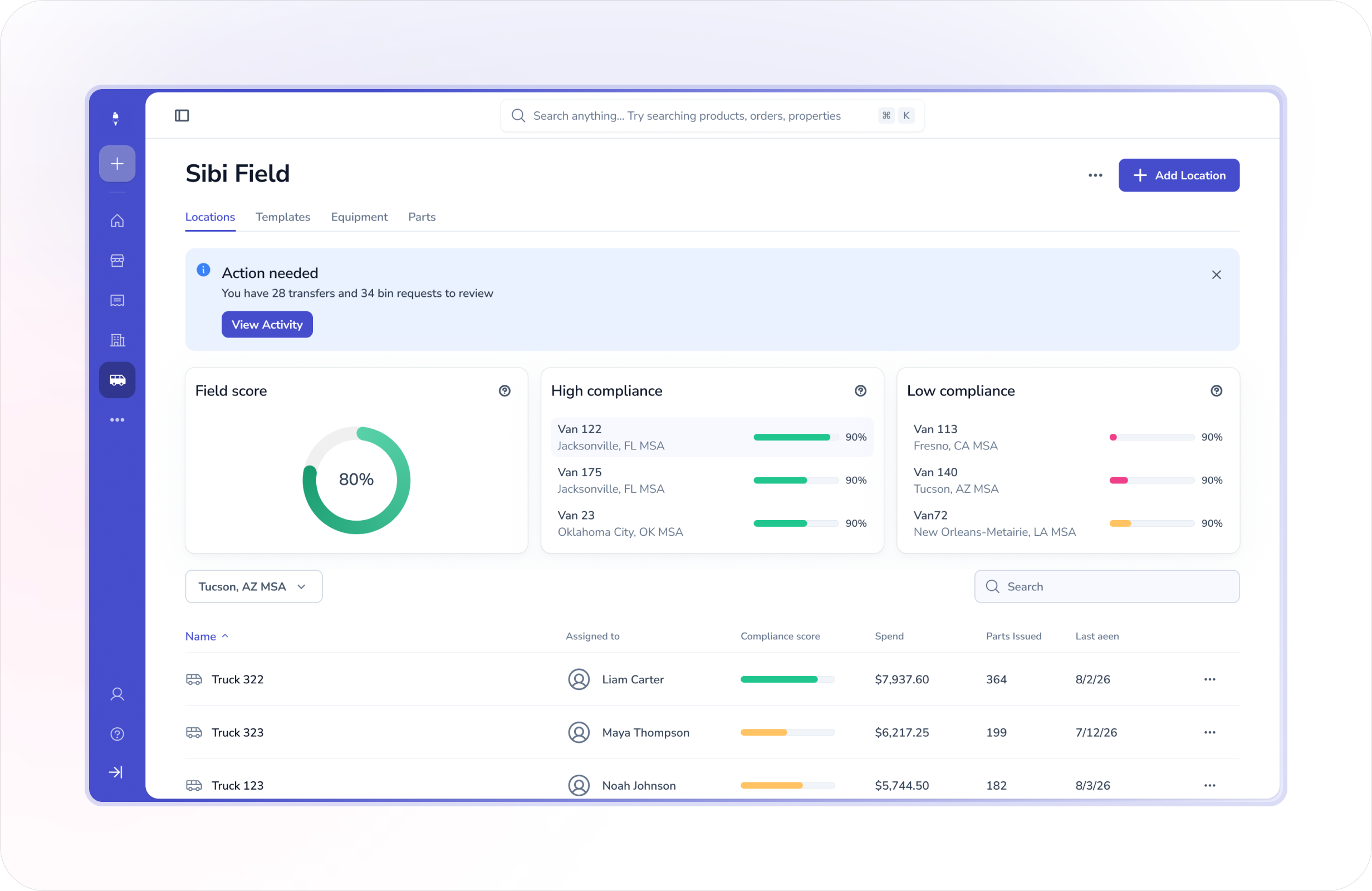
One early turning point here was where we put the complexity. Work order integrations were always part of the end state, but early on we optimized for speed-to-value by leaning into what the technician already has in hand: their phone. Nearby property selection and receipt capture helped techs stay in motion and still tie activity back to the right place. Work order numbers are supported, but optional so they remain useful when the tech has them, not a blocker when they don’t.
Create a system of record you can trust
Ops leaders would look at inventory and still not be able to answer simple questions like what’s actually on hand, where did it go, who used it, and what did it cost? When the only way to reconcile is memory or a stale spreadsheet, trust breaks down fast.
So we built toward a system of record you can trust. Field needed to make inventory history reliable and accessible and not something you have to reconstruct after the fact.
One thing we learned early: speed without accountability is a trap. If the easiest action is “edit quantity,” people will do it even when it erodes the story over time.
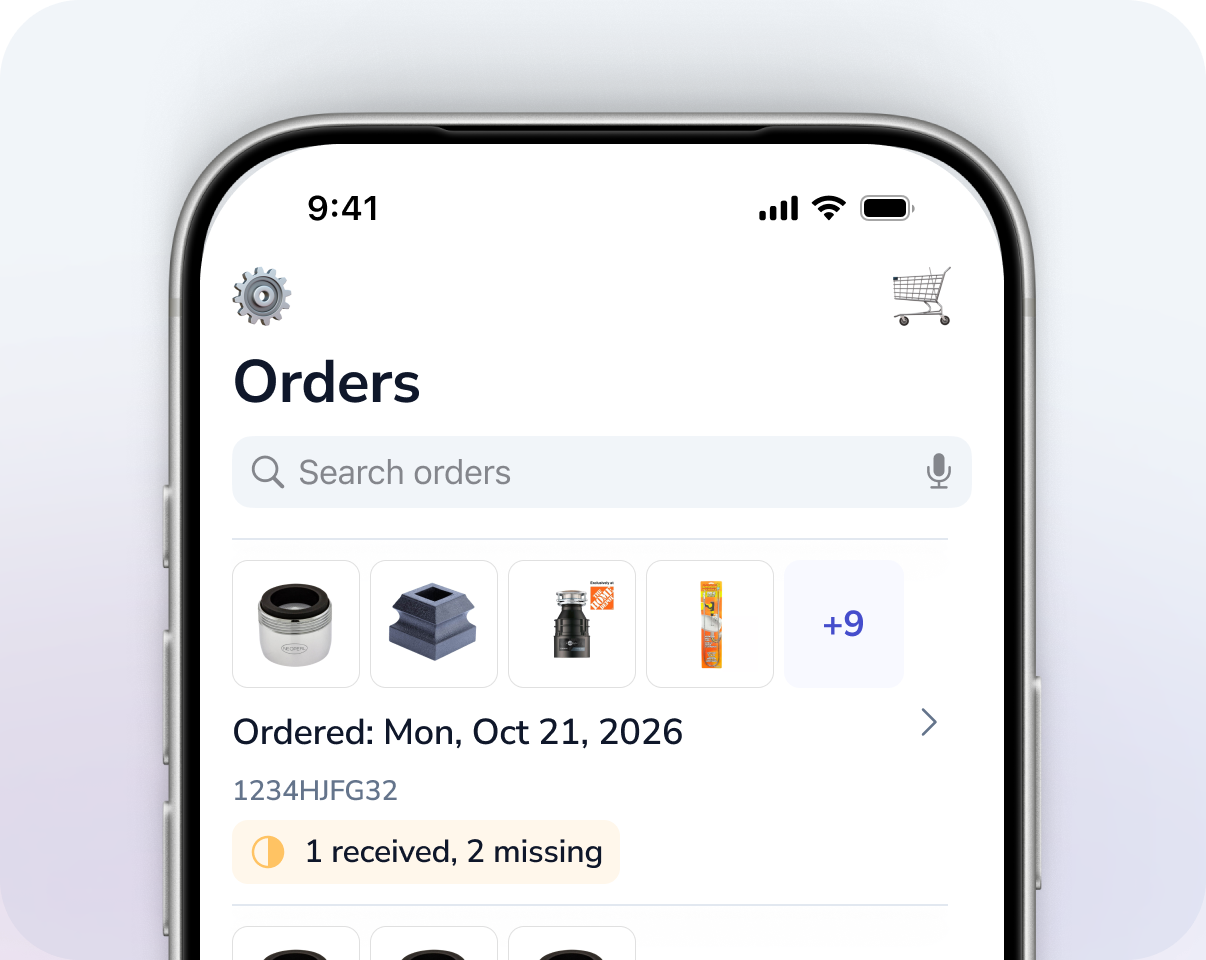
So we added the right kind of friction: keep manual edits available as an escape hatch, but bias the experience toward issuing (and receiving) as the default path so inventory stays explainable. And it had a nice side effect: once inventory moves through clear issue/receive moments (instead of quiet number changes), teams can actually trust the counts—so when it’s time to restock, they can order straight from the manufacturer through Sibi and know the right stuff will land back in the right vans.
Scale with flexible operations
The moment you expand beyond one crew, things start to drift. Each market runs inventory differently, standards diverge, and replenishment becomes unpredictable. Scaling headcount is easy; scaling consistency isn’t.
That’s why we focused on scaling with flexible operations: make it straightforward to source from preferred suppliers, configure standards through templates and market structures, and still let each operation run the way it actually needs to run.
We also learned that “set it and forget it” replenishment creates noise and distrust. Automatic replenishment at the wrong time trains people to ignore the system.
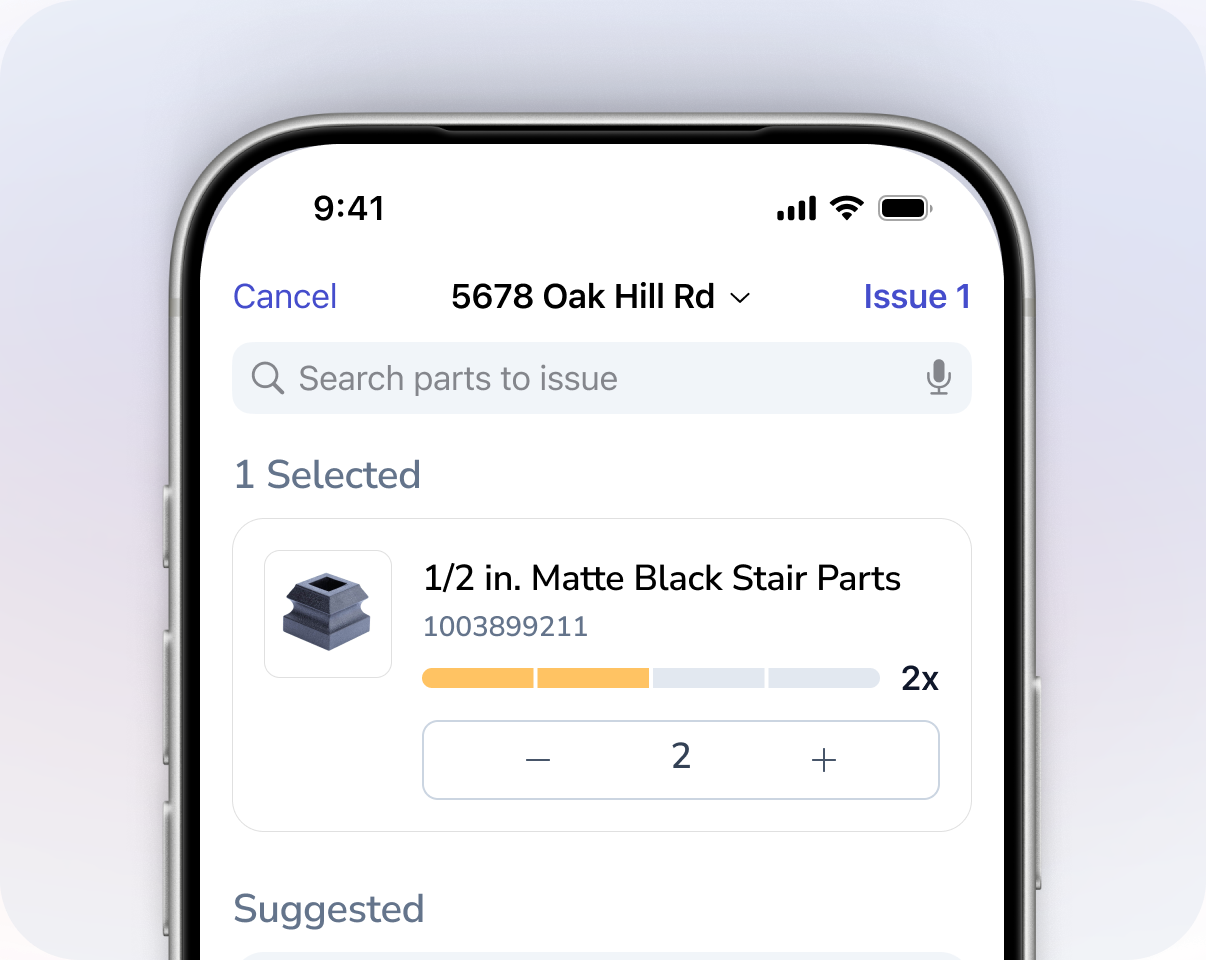
Another turning point was replenishment control. Techs needed agency to decide when to restock, while ops teams needed a clear way to enforce standards across markets. The outcome: technician-driven requests with ops-defined guardrails that are standardized through templates, approvals, and market structure.
What’s next for Sibi Field?
Where Field goes next is a continuation of the same story: help techs complete work faster, help ops teams run tighter programs, and turn daily field activity into decisions that compound over time.
Before we expand the surface area, Field has to hold up in the messy, daily reality of vans, urgent jobs, incomplete info, and last-minute changes. That’s why we’re pressure-testing Field’s core loops in real operations: receiving, issuing, replenishment requests, and inventory history, including what happens when things don’t go perfectly (stuck orders, missing details, discontinued items, and mismatched counts). For Tricon who came to us looking to reduce “windshield time” and increase first-time fixes, early usage is already moving those levers in the right direction, with fewer “missing part” moments and less time lost to unplanned hardware store runs. The near-term focus is making the receive, inventory, and issue loop more reliable and making onboarding easier so adoption doesn't depend on heavy handholding.
The longer-term goal is that Field doesn't just track what happened. It helps prevent the next failure. That requires tighter connections into work order systems and the signals ops teams already use to run the business. Work order integrations so parts, tools, and allocations map cleanly to jobs. Proactive inventory recommendations based on what gets issued, what gets restocked, and what still ends up getting bought at the store anyway. And over/under-stock alerts that help teams rebalance kits and reduce truck clutter before a stockout turns into a service failure.
Multi-location field operations: warehouses, transfers, and chain of custody
As programs scale, the model expands from a single truck to a network of warehouses, offices, and vans. Field will support warehouse locations managed alongside vans, plus transfer workflows that keep accountability intact when inventory moves from warehouse to van or van to van.
Tool and equipment programs
Field also grows beyond consumables. Tools and controlled equipment require different handling: tracking custody, supporting procurement flows with approvals where needed, and making it easy for ops teams to spot missing kits before they turn into outages.
Insights and reporting that help ops teams run the program
Over time, Field becomes an operations intelligence layer. Adoption signals by market, issuance and restock patterns, exception reporting, and dashboards that help leaders answer what's working, what's failing, and what to change, without needing a data team to pull it together.
Sibi Field is in early access. We're improving first-time fix rates and inventory allocation. Join the waitlist and help us build what’s next.
--
Say hi to Chije 👋
Role: Product Designer
Location: Washington, D.C.


